
Dangote's IPO Broke Three Nigerian Investing Apps at Login
TechCurrent Staff•10:25 UTC•11 min read
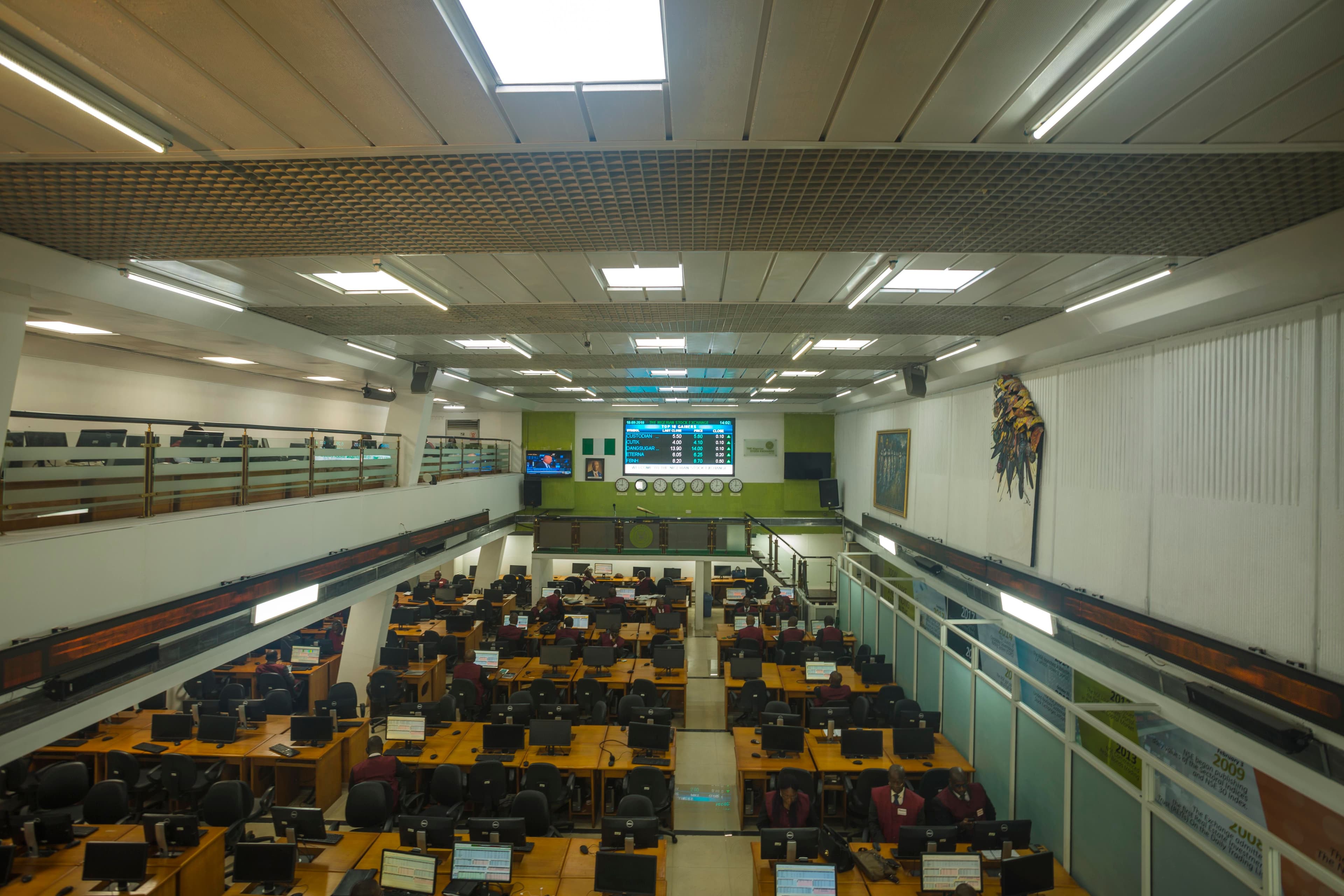
Nigeria's largest-ever share offer opened at about 8 a.m. on Monday 14 September. By late morning, three of the apps licensed to sell it could not reliably get their own users past the login screen.
Bamboo, Cowrywise and Afrinvest all degraded on day one of the Dangote Petroleum Refinery and Petrochemicals offer, according to Technext, which published at 12:33 local time naming all three. The Guardian (Nigeria) reported users hitting "failed logins" and "login expired", and said that for the better part of the day the three were "technically shut down." By the time TechCabal published at 17:19, Cowrywise had restored service and Bamboo had not.
We read The Guardian in syndication because guardian.ng blocks our fetcher, and the paper calls the third platform Afrinvestor, which is the name of Afrinvest's retail investing product, where Technext uses Afrinvest, the firm.
Neither Bamboo nor Cowrywise has published a post-incident report. As of 15 September, Bamboo's content site has not published or updated anything since 13 September, the day before the offer opened. Everything below about which component gave way is TechCurrent's reading of the public evidence, and only the companies can settle it.
The figure NGX posted, then deleted
The number everyone has run with came from NGX's verified X account on the day: 402,634 transactions worth N1,476,171,994,112, posted as a "live update" from what NGX called the "#NGXInvest command center." Nairametrics carries the exact naira figure. The Guardian reports that the post "was later deleted" and gives no explanation, because NGX has offered none. TechCurrent could not retrieve the original: x.com returns HTTP 402 to our fetcher, and there is no Wayback capture of the account for 13 to 16 September.
The post never stated a window. The only verbatim NGX text anyone reproduces is "the number of transactions so far since the opening." Nairametrics says both things in one article. Its headline and opening paragraph put the money in "within the first hour"; a few paragraphs later the same piece says total transactions "stood at 402,634" and the value was N1,476,171,994,112 "before midday," against an 8 a.m. open. The Guardian says "an hour into the transaction" in its second paragraph and reports, much further down the same piece, an unconfirmed claim of N1.5tn within six hours, noting that "the figure has not been independently confirmed by the NGX or the issuing houses."
Every throughput number drawn from that post rests on an assumption nobody sourced:
| Assumed window | Sustained rate |
|---|---|
| 1 hour (the press framing) | 112 transactions/sec |
| 2 hours | 56/sec |
| 4 hours (8 a.m. to "before midday") | 28/sec |
| 6 hours (unconfirmed) | 19/sec |
The top row is six times the bottom, and the press ran with the top row. What has been corroborated on the record is narrower than any of it. NGX Group chairman Umaru Kwairanga said subscriptions had already exceeded N10 billion a few minutes into the transaction. The Guardian reports that remark in summary rather than as a direct quote, and calls the N10 billion the one figure that has been corroborated.
The two numbers also do not describe the same population. Divide the naira total by the transaction count and the average ticket is N3,666,287, about 698 times the N5,250 retail minimum. Had all 402,634 applications been minimum retail tickets, they would have totalled N2.11bn, or 0.14% of the reported value. The naira figure is dominated by a small number of very large institutional applications. The transaction count is the retail load signal, and anyone sizing capacity off the money raised is sizing off the institutional tail.
Fifty-five channels, one shared set of dependencies
The offer was distributed through roughly 55 approved electronic channels: apps from 20 banks, two mobile money companies, NGX's own Invest platform and 32 fintech and investment firms, per Nairametrics. Chuka Eseka, group managing director of Vetiva Capital Management, the lead issuing house and lead adviser, described it as Nigeria's first public offer deliberately structured to let retail investors subscribe entirely through digital channels, in remarks The Guardian reports in summary rather than as a direct quote. Retail access to regulated Nigerian finance keeps arriving through channels whose boundaries the regulators are still drawing, from the crypto firms the CBN is letting back in through its sandbox to the 55 channels cleared to sell shares in a refinery.
Behind those channels sits a largely common chain of dependencies, and not one link in it belongs to the app.
| Leg | Whose | Blocking the user? | Evidence |
|---|---|---|---|
| Identity: BVN verified through NIBSS | NIBSS | Yes, at onboarding | NGX Group CEO Temi Popoola |
| Payment: bank channels as gateways | Banks, NIBSS rails | Yes | Popoola; Bamboo's payment options |
| CSCS account creation | CSCS | No, deferred ~2 hours | Bamboo's own IPO guide |
| Order capture into NGX Invest | NGX | Yes | NGX Invest API design |
| Registrar collation and allotment | Registrars, SEC | No, deferred ~2 months | Prospectus timetable |
The identity leg is documented in NGX's own words, though what is documented is NGX Invest itself rather than any one fintech's app. Popoola, in a July 2024 interview published on ngxgroup.com, said the platform "allows investors to easily onboard and verify their identities through the Nigeria Inter-Bank Settlement System (NIBSS) using their Bank Verification Number (BVN)," and that it "allows banks to integrate their channels as payment gateways for seamless transfers." Later in the same interview he describes NGX Invest integrating with brokers and banks through APIs, reaching CSCS for brokerage information and NIBSS for verification while supporting multiple payment gateways. Bamboo's new-user flow puts BVN right at the entrance: tap "Invest in Dangote IPO" on the landing screen, no sign-up first, then enter BVN, mother's maiden name, phone number and Nigerian bank account.
The two legs a reader would assume could not absorb a spike, the central depository and the allotment process, had both already been taken off the critical path before 14 September.
Bamboo's own guide says so plainly: "If you did not already have a CSCS account, Bamboo creates one for you in the background, usually within about two hours, and lets you know once it is ready." That is queue-and-confirm. Bamboo's earlier CSCS explainer, published 7 September, pointed the other way: it urged readers to have a confirmed, active CSCS account before the subscription window opened, saying that costs nothing and "takes a few business days to complete." Two hours against a few business days is a real gap. It is consistent with an expedited path built for this offer, though Bamboo has not described one.
Allotment is deferred further, by regulation rather than by engineering. On the offer's indicative timetable, registrars do not collate applications until 27 October, issuing houses submit a proposed basis of allotment on 5 November, the SEC is expected to give its no-objection on 11 November, and CSCS accounts are credited in early December. Allocation is pro rata above a threshold. Bamboo has told customers outright, in TechCabal's summary of its statement, that shares will not be allocated on a first-come, first-served basis, and that investors who subscribe later in the offer period will not be disadvantaged.
Nothing about tapping subscribe at 8:04 a.m. bought anyone a single extra share.
The failures showed up at the login screen
Bamboo's public post on X, quoted identically by Premium Times and ThisDay, located the problem precisely: traffic was "making it difficult for some users to log into the Bamboo app." Users reported failed logins and expired sessions, not failed subscriptions.
Login is the easiest thing in an investment app to scale ahead of time. It carries almost no per-user state, it does roughly the same work on every request, and you can put more copies of it behind a load balancer the week before. When that is the piece that falls over, the constraint is either at the platform's own edge or it is backing up from something slower behind it.
Technext reported that the outage reached traffic that had nothing to do with the IPO: users could not check balances, review existing investments or withdraw cash. One Cowrywise customer said they needed to withdraw money to pay bills and could not get in. That is what a saturated shared resource looks like: a bounded pool of connections, threads or workers fills with requests blocked on one slow synchronous downstream call, and every unrelated endpoint sharing that pool goes down with it. The symptoms fit. They fit other things too, and nobody has confirmed any of it.
The list of candidates can be narrowed. CSCS creation was out of band. Allotment was two months away. NGX Invest was not reported failing anywhere in the coverage we reviewed, and Nairametrics reported on the morning of the open that NGX had "upgraded its NGX Invest platform to accommodate the expected level of activity." That leaves the brokers' own auth and session tier, the BVN identity call for the flood of new users, and the payment leg. Absence of reports about NIBSS, CSCS or NGX Invest is not evidence that they were fine, and no verified throughput baseline for NIBSS was obtainable: nibss-plc.com.ng returned 403 to every attempt.
The Guardian quotes fintech commentator May Codegidi contrasting the app disruptions with bank channels, which she said processed subscriptions without similar difficulty. That is one named commentator relayed by a newspaper, not NGX or CBN data. If it holds, it points away from the shared downstream infrastructure, because a binding constraint at NIBSS or CSCS would have been expected to hurt the bank apps too.
236,000 new accounts in the week before the offer
The demand arrived a week early, and Bamboo's own numbers show it. All of these are company-reported, given in a statement to TechCabal, and TechCurrent has not verified them independently: over 236,000 new accounts in the week before the offer, 64% of them (152,000) funded and trading in the same week, against a previous best month of 172,000 in May, and a 350% rise in new users ahead of the IPO.
236,000 in seven days is about 33,700 a day. May's record month was about 5,500 a day. The pre-IPO week ran at roughly 6.1 times Bamboo's best-ever daily signup rate, and the seven-day total beat the all-time monthly record by 37%. Most operators would take that problem, and it arrived in a market Uber walked out of rather than keep serving. It was sitting in the company's own funnel for a full week before the doors opened.
Bamboo has said what it sized against. It told TechCabal it had prepared for two to three months and that it "was optimistic about giving our users a reliable experience based on how our systems handled a surge in new NGX users in the past."
Past NGX surges are secondary-market trading by users who already exist: onboarded, verified, already holding a CSCS account. An IPO opening is a primary-market onboarding workload, a different mix entirely of new identities, BVN validations, first-time payments and account provisioning. The historical baseline does not carry across.
That quote has been reproduced in a form that reverses its meaning. TechCabal prints the same fragment twice against different lead-ins. In the first, "We anticipated a large wave of demand and prepared our systems accordingly over the last 2-3 months, but ultimately that did not happen" reads, taken literally, as though the demand did not happen, which every other fact in the story contradicts. The second rendering resolves it: optimism about "giving our users a reliable experience... But ultimately that did not happen." TechCabal's own paraphrase in the same article reads it the same way, that "the preparations fell short." This is TechCurrent's reading of the published text, not a clarification from Bamboo, which has issued none.
Cowrywise gave the tighter account. A spokesperson told TechCabal the launch "generated a significant surge in traffic today, which resulted in some slower-than-usual response times for about an hour, after which full service was restored," and that the company had scaled its infrastructure ahead of the launch but saw request volumes exceed what it had prepared for. That sits in tension with The Guardian's description of a day-long shutdown across all three platforms. The hour is the company's own number.
The next spikes land at payday and on 13 October
The offer runs to 13 October, and both companies have pointed customers at the dates most likely to concentrate load again. Cowrywise told users to retry in-app now. Bamboo said: "We don't expect that everyone will want to buy IPO shares today. We expect many investors to buy at the end of the month when they receive salary as well as the end of the IPO on October 13."
None of the standard answers for a spike you can see coming are new. Admission control at the edge lets a bounded number of requests through per second and gives everyone else a queue position and an honest wait, which is the thing users lost on Monday: they could not tell whether they were in. Behind that, accept the subscription intent, return a receipt and settle afterwards, which is what Bamboo already does with CSCS creation. Read traffic can be shed deliberately, and balance checks and portfolio views are the largest and least urgent share of an IPO-day load. They were the first thing to break anyway. At the integration boundary, a per-dependency connection pool, timeout and circuit breaker keeps a slow third party from taking the login screen down with it. And a load test built on a primary-market onboarding mix, new identities and new payments, is a different test from a busy trading day replayed louder.
Technext handed readers the cheapest fix directly. Its advice to locked-out investors was to "refrain from submitting multiple orders during such instability" and to check transaction history "to avoid duplicate transactions." An idempotency key, a unique identifier attached to a submission so a retry resolves to the same application instead of a second one, moves that burden off the customer and onto the system.
Whether any duplicates or lost applications actually occurred is not known. Nobody will be able to say for certain until the registrars collate the file, and on the prospectus timetable that does not happen until 27 October.
“Nothing about tapping subscribe at 8:04 a.m. bought anyone a single extra share.”
Reporting by TechCurrent Staff · TechCurrent