Uber quits Nigeria and Uganda as the naira breaks its math
TechCurrent Staff•Sep 2•6 min read
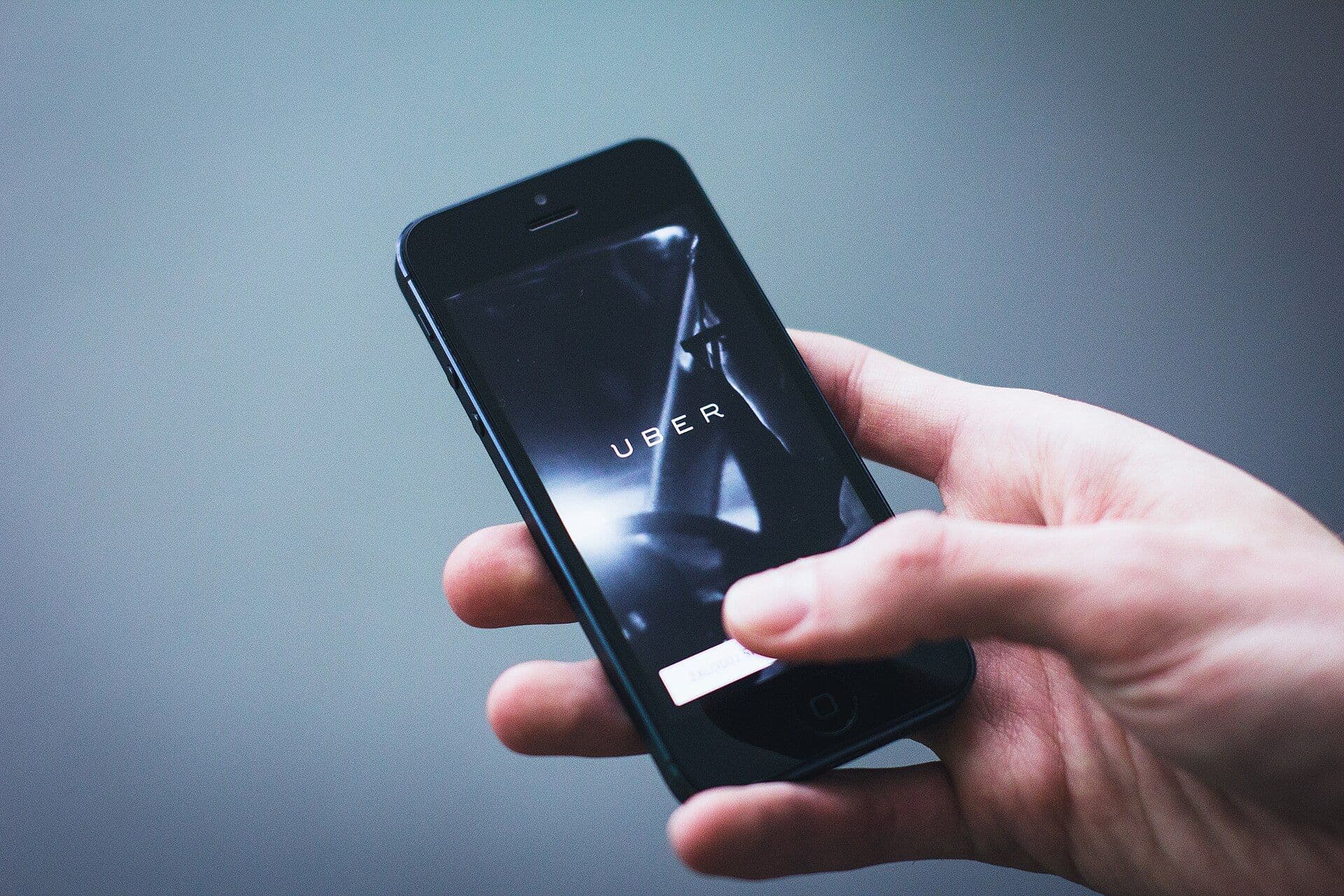
Uber told Nigerian riders it was leaving by email. "After a thorough review of our business, we have made the tough decision to wind down our operations in Nigeria, effective 2 September 2026," the company wrote, closing out a 12-year run that began in Lagos in 2014, according to TechCabal and BusinessDay. That email is, so far, the entire public record. There was no standalone company announcement; coverage across outlets is built on it.
Uganda got the same goodbye the same day, after roughly ten years of operations there, per Pulse Uganda and NewsCentral. They are the company's third and fourth African market exits in about twelve months. Active drivers get a one-time "goodwill payment" whose amount Uber has not disclosed, according to TechCabal, and the Help Centre stays open until September 23, per Techweez.
The exits landed on a heavy day for the company. On September 2 Uber also announced its largest workforce reduction since May 2020, about 10% of its global staff, roughly 3,300 of some 34,000 roles, with CEO Dara Khosrowshahi telling employees the company needs to be "simpler" and "faster," according to CNBC. A day earlier, on September 1, it had discontinued its budget UberX tier in South Africa, TechCabal reports.
Uber has not linked any of these decisions to each other, and it has not explained the exits beyond that email. But the pattern is hard to miss: global retrenchment, expressed through the markets where the unit economics were weakest. (TechCabal put Uber's African footprint at eight countries before this week; outlets disagree on how many remain, so treat any specific count with caution.)
The exits started in Abidjan
Uber's first full country exit in Africa came in September 2025, after six years in Côte d'Ivoire, per Innovation Village. The Africa Report and Launch Base Africa attribute that loss to pressure from Yango, Bolt and inDrive, compounded by driver cash-flow constraints and limited local adaptation.
Tanzania was a regulatory story. LATRA, the transport regulator, capped platform commissions at 15% in 2022, down from around 33%, and imposed fixed guide fares. Uber suspended service in April 2022, returned in 2023 after the cap eased to roughly 25%, then quit for good on January 30, 2026, per TechCabal.
Nigeria fits neither story. No regulator capped Uber's commission in Lagos, and no single rival crushed it. What moved was the currency, and the price of petrol.
Timeline: 2014 Lagos launch → May–Jun 2023 fuel subsidy removed, naira floated → Sep 2025 Côte d'Ivoire exit → Jan 2026 Tanzania exit → Mar 2026 Lagos driver strike → Sep 2, 2026 Nigeria and Uganda exits, same-day 10% global cut → Sep 23, 2026 support ends.
The naira math
The inputs are all public. When Nigeria floated the naira in June 2023, the central bank rate went from ₦464.5 to ₦708.2 per dollar within a week, a third of the currency's value gone in seven days, per Trendtype. The naira then closed 2024 at ₦1,535/$, a 40.9% depreciation in that year alone, according to Nairametrics. As of August 31, 2026, the official rate sits near ₦1,338/$, per Monierate. A naira earned in Lagos today buys roughly a third of the dollars it did in mid-2023.
Fuel moved the same direction. After the May 29, 2023 subsidy removal, pump prices jumped from an official ₦185–₦199 per litre (it varied by region) to ₦488–₦557 within days, according to AllAfrica, hit a then-record ₦617 by July 2023, per Al Jazeera, and crossed ₦1,000 per litre in parts of the country by October 2024, when NNPC sold petrol at ₦1,030 in Abuja and ₦998 in Lagos, per THISDAY.
Uber reports revenue in dollars but collects fares in naira. To keep a driver's take-home merely flat against fuel that cost roughly five times more, naira fares had to climb steeply, while every naira of commission converted to about a third of the dollars it used to. A fixed-percentage take on top of algorithmic pricing got caught from both ends: rider price sensitivity capped how far fares could rise, and driver economics collapsed underneath them. That reading is ours, not Uber's. The company never disclosed Nigeria-level driver counts, trip volumes or revenue, so nobody outside it can size the loss, and we won't estimate numbers that don't exist publicly.
The drivers already told everyone
The distress was visible six months before the exit. On March 15, 2026, the app-based transporters' union AUATON began a three-day strike in Lagos across Uber, Bolt, inDrive and Lagride over low fares and rising costs, per Nairametrics. "Drivers operating on these platforms face rising operational costs, including high fuel prices, vehicle maintenance, inflation, and daily living expenses," union spokesperson Steven Iwindoye said at the time.
In a May 2026 petition to the Lagos State attorney-general, AUATON demanded commissions be capped at 5% or replaced with a flat daily subscription of ₦500–₦1,000, and claimed a driver grossing ₦60,000 a day loses as much as 27% to commissions and booking fees, a union claim that has not been independently verified, as reported by The Guardian Nigeria. TechCabal notes the exit followed this extended run of clashes with drivers, though no reporting has established the disputes as the cause of the decision.
Bolt and inDrive inherit the riders
Bolt is now the market's heavyweight. TechCabal puts its Nigerian share at 66% on roughly a 20% commission, though that figure comes from Queva Advisory and is single-source, with the methodology unclear. Bolt tested rider-driver fare negotiation from November 2024 to February 2025, then shelved it. The likeliest explanation for its survival is sheer ride density: enough liquidity to hold a conventional commission model where Uber's thinner volumes couldn't.
inDrive simply takes less. Riders and drivers negotiate fares directly, and the company puts its Lagos service payment at just under 10%, 9.99% per a BusinessDay interview, though inDrive's own promotional material has also cited 9.5%. The model has critics of its own. AUATON has called the bidding system "inhumane," saying passengers force ₦5,000 trips down to ₦1,500–₦2,000, per Technext.
Lagride, backed by Lagos State and operated in a joint venture with CIG Motors, goes at the driver's biggest fixed cost instead. It runs drive-to-own schemes in which drivers work toward vehicle ownership over 18 months to four years, and is deploying electric vehicles toward a stated target, not an achieved share, of 70% of the Lagos market, per Nairametrics. Subsidizing the car instead of the ride changes what a fare has to cover.
None of the three runs Uber's model unchanged, and that is probably the story. In a market where the currency is devaluing and petrol costs five times what it did, a platform's take-rate and payout structure stop being back-office settings; they decide whether drivers stay. Côte d'Ivoire showed that driver cash flow decides platform loyalty. Tanzania showed that a regulator will set the take-rate itself if drivers revolt loudly enough. A globally standardized commission percentage, denominated in a strengthening dollar, looks like a neutral technical choice until the local currency gives up two-thirds of its value.
Bolt now operates with two fewer rivals and an obvious opening to nudge its take-rate upward. Lagride still has to prove drive-to-own works beyond Lagos. And Uber keeps some number of African markets, exactly how many is disputed, that price rides in currencies it does not report in.
“A naira earned in Lagos today buys roughly a third of the dollars it did in mid-2023.”
Reporting by TechCurrent Staff · TechCurrent