
DDR4 Costs 60% More Than DDR5 on One Board of Five
TechCurrent Staff•19:34 UTC•13 min read
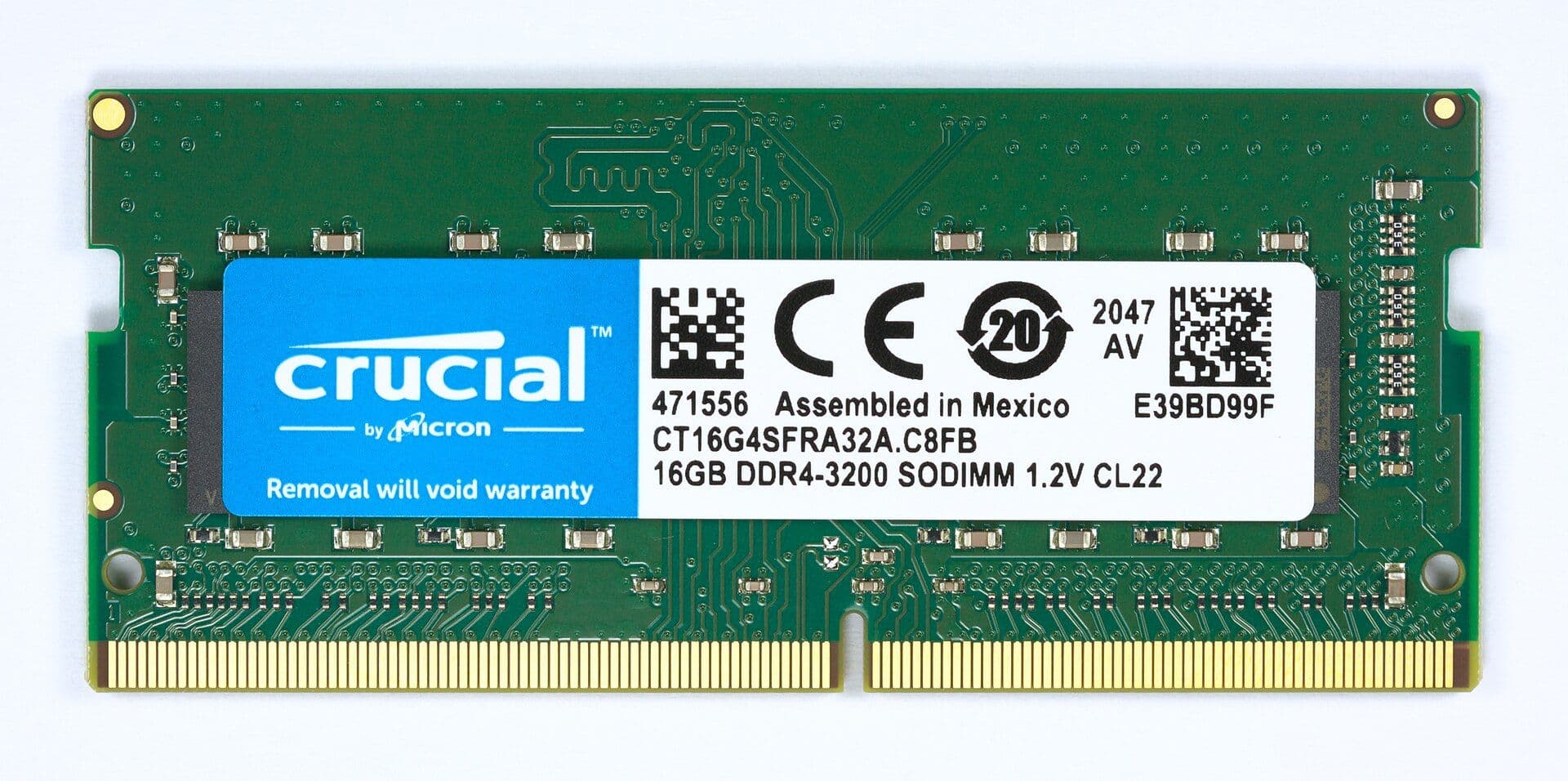
A 16Gb DDR4-3200 chip carried a session average of 87.625 on TrendForce's DRAM spot board at 18:10 Taipei time on 16 September. The current-generation part, a 16Gb DDR5-4800/5600 chip, sat at 54.833. Last generation's memory cost 59.8 percent more than this generation's. The 15 September board had the same two lines at 89.125 and 54.367, a 63.9 percent premium.
That inversion is real. It is also drawn from the least reliable line TrendForce publishes, and the firm prints the evidence two columns to the left. The DDR4 row's daily high was 120.00 and its low was 45.00: same part, same session, a 2.67 times spread. DDR4 8Gb ran wider, 82.00 against 24.80, or 3.31 times. An average taken across a range like that is a weak statistic.
TrendForce publishes four other price layers. Run the same DDR4-against-DDR5 comparison on those and the premium narrows to under two percent, and on one layer it goes the other way.
The premium lives on one row out of five
| Layer | DDR4 | DDR5 | Result |
|---|---|---|---|
| Chip spot, tested, 16Gb | 87.625 | 54.833 | DDR4 +59.8% |
| Chip spot, eTT, 16Gb | 12.90 | 24.30 | Reversed. DDR5 +88.4% |
| Module spot, 16GB | 163.70 | 234.00 | No inversion. DDR5 +42.9% |
| Contract SO-DIMM, 8GB vs 8GB | 139.00 | 130.00 | DDR4 +6.9% |
| Contract SO-DIMM, per GB | 16.5625 | 16.25 | DDR4 +1.9% |
Chip spot figures are the 2026-09-16 18:10 (GMT+8) board. Module spot is the module board, last updated 2026-09-07 14:40 (GMT+8). Contract figures are the DRAM contract board, labelled 2H Jul and last updated 2026-07-31 15:00 (GMT+8), which makes it the stalest layer here by more than six weeks. Per-GB and percentage columns are TechCurrent arithmetic.
There is a trap in the contract row. That second-half-July table lists a DDR4 16GB SO-DIMM at 265.00 and a DDR5 SO-DIMM at 130.00, which reads as a 104 percent premium for the older part. The DDR5 row is labelled DDR5 8GB SO-DIMM. Half the capacity. The like-for-like comparison sits three rows away in the same table: DDR4 8GB SO-DIMM at 139.00 against DDR5 8GB SO-DIMM at 130.00, a gap of 6.9 percent. Per gigabyte, setting the 16GB DDR4 module against the 8GB DDR5 one, 1.9 percent.
At the layer where large buyers negotiate monthly volumes, then, previous-generation memory carries a low single-digit premium. At the layer where brokers trade odd lots it carries a 60 percent premium inside a 2.67 times daily range. Spot leads the contract market, and for good reasons: it is where marginal scarcity prices first. It is still not a cost input anyone can multiply by a gigabyte count.
The boards also disagree with each other. Eight 16Gb dies make a 16GB module, so at the 16 September spot session average that is 8 × 87.625 = $701.00 of silicon inside a module TrendForce's own module board prices at $163.70. Take the day's low instead and eight dies still come to $360.00, more than double the finished module. DDR5 has the same problem in a milder form: 8 × 54.833 = $438.66 of die against a $234.00 module. Some of that is staleness, since the module board had gone nine days without a refresh when the chip board updated. TechCurrent could not account for the rest and is leaving the gap visible rather than smoothing it over.
DDR4 eTT die are the cheapest thing on the board
TrendForce prices two DDR4 lines and two DDR5 lines. One of each is marked eTT and trades far below the tested, speed-graded part:
- DDR4 16Gb: eTT 12.90 against tested 87.625, or 14.7 percent - DDR4 8Gb: eTT 5.59 against tested 45.786, or 12.2 percent - DDR5 16Gb: eTT 24.30 against tested 54.833, or 44.3 percent
TrendForce does not define eTT on the board, and industry usage splits over whether the term means untested die or partially tested die. TechCurrent could not find an authoritative definition and will not assert one. Nothing here rests on it. Whatever separates the two lines, a DDR4 buyer pays roughly three times the relative premium for it that a DDR5 buyer pays.
Read that ratio straight and the scarce thing is DDR4 that a manufacturer will still test, bin, guarantee and stamp with a speed grade, rather than DDR4 silicon as such. That is TechCurrent's inference from a price ratio, not a statement anyone in the supply chain has made.
The supply side fits it. In its 7 September market note TrendForce says "suppliers' inventories remain at historic lows, with additional supply mainly allocated for server use." It credits Samsung's bit-shipment growth to "its early move into HBM4 mass production and shipments," says Micron "continued to prioritize higher-priced server DRAM in its product mix amid capacity constraints," and notes that "suppliers such as Nanya, Winbond, and PSMC remain focused on mature-process products," DDR4 and DDR3 among them. The same AI build-out TechCurrent followed into the optical interconnect bottleneck arrives here as a line item on a phone. Micron's LPDDR4/4X page offers the family "in a wide variety of package sizes and temperature ratings for industrial and automotive applications," a narrower framing than mainstream mobile.
Samsung's LPDDR4X page says the product has been discontinued
Samsung's LPDDR4X product page currently displays the line "This product has been discontinued." Samsung's DDR4 and LPDDR5X pages do not carry that line, so it is not boilerplate stamped on every product page.
One thing on those pages is boilerplate, and it looks like corroboration. All three, LPDDR4X included, carry a footer notice reading "As of July 31, 2025, this page is no longer available." It sits beside a contact form, it reads identically on the LPDDR5X page for Samsung's current mobile memory line, and it names no part. It establishes nothing.
That leaves the discontinued line on its own. TechCurrent could not establish whether it covers the entire LPDDR4X family or one product the page once described, and Samsung has named no end-of-life date and no replacement part. Treat it as one signal rather than a confirmed exit.
A Helio G85 phone cannot take LPDDR5 at any price
Which DRAM generations a device can use is not a purchasing decision. It is enumerated in the system-on-chip's memory controller and frozen when the chip is designed.
MediaTek publishes the list. Its Helio G85 page states memory support as "LPDDR4x" at "1800MHz" with a maximum of "8GB." Its Helio G36 page lists "LPDDR3 @ 933MHz" and "LPDDR4X @ 1600MHz." Neither lists LPDDR5 in any form. These are the parts in the entry tier. Nothing on a Helio G85 die can talk to LPDDR5, so no amount of money moves that phone onto it. It can only be replaced by a different phone built around a different SoC, which is a product cycle rather than a procurement call.
Demand can still migrate, though, and the direction it takes is worth knowing. TrendForce, as reported by The Register in June, describes hardware makers respinning DDR4 designs onto DDR3 and DDR3 designs onto DDR2 to hold system cost down. Memory demand is inelastic within a product cycle and elastic between cycles, and when it moves it moves backwards, onto the older controller the design already supports. So the squeeze feeds itself. The same report has DDR2 contract prices up 55 to 60 percent in 2Q26 with a further 35 to 40 percent expected in 3Q26. On TrendForce's contract board a DDR3 4Gb 256Mx16 chip carries the same 14.50 average as the DDR4 4Gb 256Mx16 part sitting next to it, and it climbed harder to get there: 16.00 percent against the DDR4 row's 11.54.
We tried to price the memory in a $110 phone
The plan for this piece included a bill-of-materials table walking 4GB and 8GB LPDDR4X configurations from chip price to landed cost. The condition was a second, independent price source, because no arithmetic should rest on a single quote inside a 2.67 times range. That condition was not met.
- DRAMeXchange, the obvious second source, describes itself as "a Business Division of TrendForce Corp." It served a byte-identical table with the identical 2026-09-16 18:10 timestamp. Same company. - TrendForce's LPDDR spot board is public, has row labels for LPDDR3 and LPDDR4, has no LPDDR4X row at all, and every price cell is empty. - Its Mobile DRAM contract board has exactly the right rows, LPDDR4X 8GB and LPDDR4X 4GB, last updated 3 August for 3Q26, with no values shown. The figures sit behind a paid research report.
So there is no public per-chip LPDDR4X price, which also means that anyone building phone-cost arithmetic on DDR4 numbers is working from the wrong input. A Tecno POP 20 with 4GB was listed on Jumia Kenya at KSh 14,299 on 16 September, roughly $110 at about KSh 130 to the dollar, or about $95 before Kenya's 16 percent VAT and before any distribution or retail margin. Price 4GB of memory into that phone using the public commodity DDR4 figures:
| Input | Source | 4GB comes to |
|---|---|---|
| $17.52/GB | Raspberry Pi retail ladder, marginal | $70.08 |
| $24.00/GB | TrendForce DDR4 16Gb contract, 2H Jul 2026 | $96.00 |
| $43.81/GB | TrendForce DDR4 16Gb spot, 16 Sep 2026 | $175.24 |
TechCurrent arithmetic. The third figure exceeds the phone's entire retail price by 59 percent. All three exceed any plausible memory share of a $110 device.
That is not a problem with the sources. It is the wrong category of input. Commodity PC DDR4 is not LPDDR4X: different package, different interface, different operating voltage, different customers, different contracts. Mobile DRAM has always priced on its own track. A BOM table built on DDR4 spot would have overstated entry-phone memory cost by something like three to four times, and it would have looked authoritative doing it. So this article has no BOM table.
Raspberry Pi's 16GB board went from $120 to $305 in ten months
The closest public substitute is Tier-1, dated and checkable: Raspberry Pi's own list prices. The Pi 5 uses LPDDR4X-4267 SDRAM, and across the line the only input that varies is how much of it sits on the board.
| Date | 16GB Pi 5 | Move |
|---|---|---|
| Pre-December 2025 | $120 | baseline |
| 1 December 2025 | $145 | +$25 |
| February 2026 | $205 | +$60 |
| 1 April 2026 | $305 | +$100 |
| 16 September 2026 | $305 | unchanged |
Baseline and the three increases come from The Register's 1 December 2025 and 1 April 2026 reporting; the steps sum exactly to the endpoint, and the endpoint and memory type are confirmed on Raspberry Pi's own product page as of 16 September. That is +154 percent in ten months. Raspberry Pi CEO Eben Upton, quoted by The Register in December, said "the current pressure on memory prices, driven by competition from the AI infrastructure rollout, is painful but ultimately temporary." By April he was saying "2026 looks likely to be another challenging year for memory pricing."
The per-gigabyte number comes out of the reseller ladder. Approved reseller The Pi Hut listed the Pi 5 on 16 September at £43.20 (1GB), £62.40 (2GB), £105.60 (4GB), £168.00 (8GB) and £292.80 (16GB) including UK VAT. Strip 20 percent VAT, which the clean round results confirm is embedded, and the last two steps both come to exactly £13.00 per gigabyte, or about $17.52/GB at 1.3477 to the pound. TechCurrent arithmetic.
Line that up against everything else public:
| Source | What it measures | $/GB |
|---|---|---|
| Pi 5 retail ladder, marginal | LPDDR4X, board retail ex-VAT | 17.52 |
| TrendForce contract, DDR5 8GB SO-DIMM | tested module, contract | 16.25 |
| TrendForce contract, DDR4 16GB SO-DIMM | tested module, contract | 16.56 |
| TrendForce contract, DDR4 8GB SO-DIMM | tested module, contract | 17.38 |
| TrendForce contract, DDR4 16Gb chip | tested die, contract | 24.00 |
| TrendForce spot, DDR4 16Gb chip | tested die, spot | 43.81 |
Everything representing a negotiated transaction clusters between $16 and $24. The spot session average sits at roughly twice the top of that band. A Taiwanese research firm's contract desk and a British single-board computer vendor's price list have nothing to do with each other, and both put the spot quote outside the band.
Transsion's production fell about 27 percent while the market fell 8
TrendForce's 8 September production update puts 2Q26 global smartphone production at 275 million units, down 8 percent year on year, and ranks the brands: Samsung 62m, Apple 52m, OPPO 30m, Xiaomi 29m, vivo 21m, and Transsion at nearly 20m, down about 27 percent year on year. TrendForce attaches a year-on-year figure to only three of those six: Samsung up about 7 percent, Apple up about 14 percent, and Transsion. Transsion is the only brand in the ranking the firm reports going backwards.
TrendForce's explanation is worth quoting in full. Transsion's portfolio is "concentrated primarily on entry-level and low-end smartphones, and with lower inventories of lower-cost memory than its competitors, the company has been more heavily affected by the current surge in memory prices."
Transsion describes its market as "global emerging markets" and sells there through Tecno, Infinix and itel. On Jumia Kenya on 16 September, every Tecno listing below about $150 carried 4GB of RAM: the POP 20 at KSh 14,299 to KSh 16,199 (roughly $110 to $125), the Spark 50 4G from KSh 17,999 to KSh 18,999 (roughly $139 to $147). The cheapest 8GB device on the page, the CAMON 50, was KSh 33,999, roughly $262. One retailer on one day is a snapshot rather than a price series, so that locates the segment rather than measuring what has happened to it. It does establish that the sub-$150 tier is 4GB territory, and on the entry-tier silicon described above, 4GB means LPDDR4X, the memory nobody is being paid enough to keep qualifying.
Forecasts for that segment are all negative and none of them agree. Three of the four reach us through The Register rather than from the analyst firms directly, and that needs saying out loud. Gartner said in February that smartphone shipments would fall around 8 percent in 2026. CCS Insight said in June the market would shrink 15 percent, with entry-level price rises exceeding 50 percent year on year. Omdia in July put the market at minus 12 percent, sub-$400 shipments down 22 percent year on year, above-$600 up 5.7 percent. TrendForce's September figure is minus 14 percent, and it counts production rather than shipments. These measure different things at different dates, which is why the spread matters more than any single figure in it.
Nanya's July revenue was up 719.6 percent year on year
TrendForce puts 2Q26 industry DRAM revenue at nearly $154.73 billion, up 59.5 percent quarter on quarter, driven by "sharp rises in traditional DRAM contract prices," with suppliers' inventories "at historic lows." Inside that: Samsung $60.98bn (+63.4 percent QoQ), SK hynix $38.59bn (+37.9), Micron $36.0bn (+65.5). Then the legacy specialists: Nanya $2.612bn, +68.3 percent, Winbond $998m, +75.8 percent, PSMC $115m, +167.8 percent.
Nanya's own monthly filings confirm it independently. April, May and June revenue of NT$25.49bn, NT$27.67bn and NT$29.39bn sums to NT$82.55bn, which at about NT$31.60 to the dollar is $2.612bn, matching TrendForce's figure to three decimal places. July then came in at NT$43.87bn, up 49.3 percent on June and 719.6 percent year on year.
Micron's third-quarter results, reported 24 June, show revenue of $41.456 billion against $9.30 billion a year earlier, GAAP gross margin of 84.6 percent, and guidance of $50.0 billion for the following quarter. CEO Sanjay Mehrotra attributed it to "the strategic value of memory in the AI era."
None of that reaches a 4GB Tecno. New wafer capacity runs on a fab's clock rather than a product cycle's, the same mismatch TechCurrent traced through the economics of the 2nm node: Micron has said initial wafer output at its first Idaho fab comes in "mid-calendar year 2027". Until then the three fastest-growing DRAM businesses in TrendForce's table are Nanya, Winbond and PSMC, the three the firm describes as focused on mature-process products, and TrendForce expects conventional DRAM contract prices to rise a further 13 to 18 percent in the current quarter. The LPDDR4X rows that would show what that does to a 4GB phone in Nairobi are the ones on the mobile contract board, blank to the public and priced behind a research report.
“Eight DDR4 dies at the spot session average come to $701 of silicon inside a module TrendForce prices at $163.70.”
Reporting by TechCurrent Staff · TechCurrent