
Nigeria's CBN Opens Its Sandbox to the Startups It Cut Off
TechCurrent Staff•Sep 3•7 min read
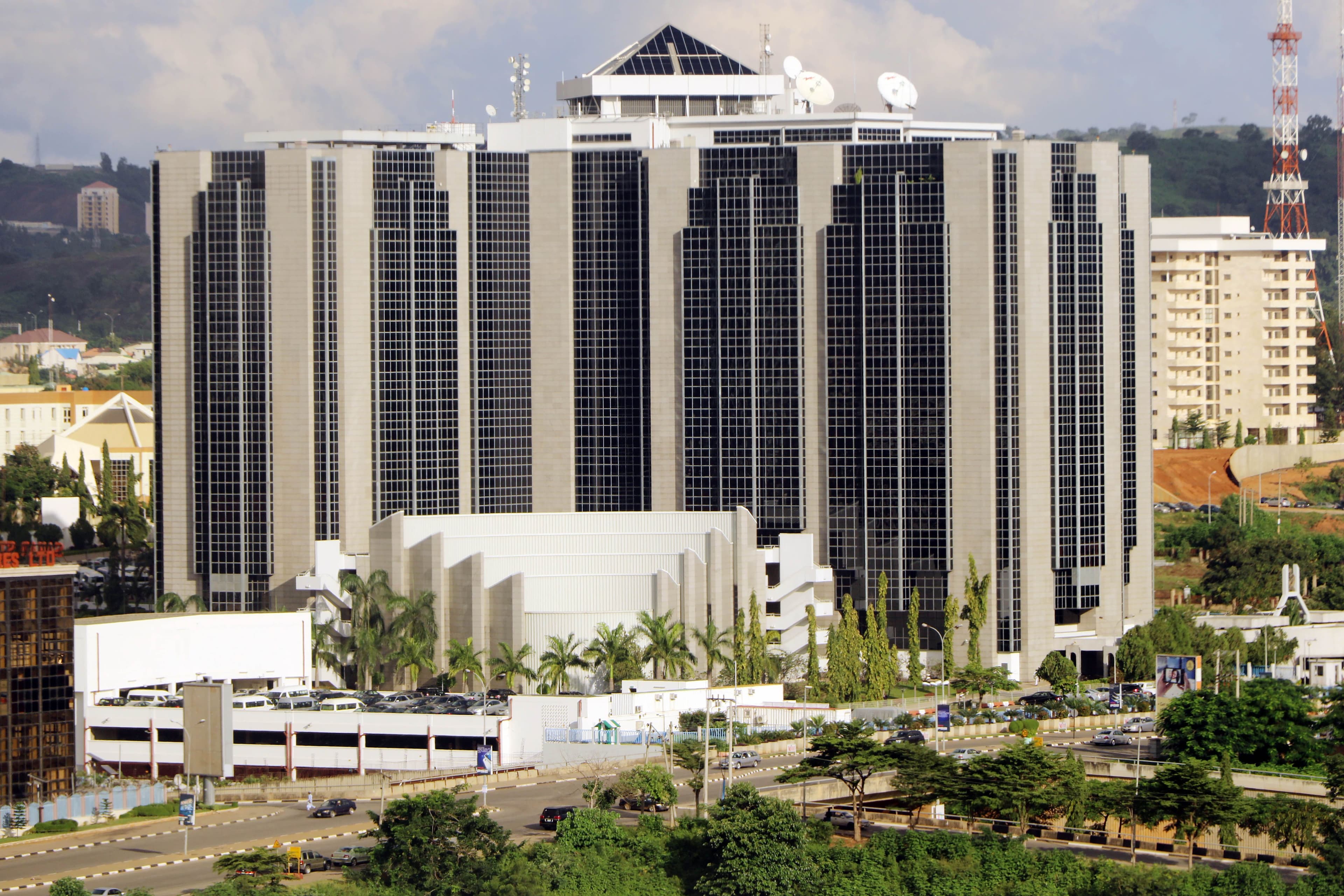
On August 31, applications closed for Cohort 2 of the Central Bank of Nigeria's Regulatory Sandbox, the first to include a dedicated track for Virtual Asset Service Providers, stablecoin issuers included. Selections have not been announced, and the CBN has not published a date for them. But whenever the names land, they will mark a first: Nigeria's central bank directly supervising live tests of stablecoin startups, five years after it ordered banks to close the accounts of anyone touching crypto.
The reversal happened in stages, and the stages decided who now regulates what in Nigerian crypto.
Two tracks, and unlicensed startups can apply
Cohort 2 ran a three-week application window, August 12 to 31, 2026, per the CBN's announcement as reported by Nairametrics and TechCabal. The CBN's sandbox portal sets out two tracks. The VASP track covers virtual asset and stablecoin services with payment, settlement or store-of-value functions: stablecoin issuance, virtual asset payments, digital wallets, custody, token products, fiat on- and off-ramps, and exchanges. A second, non-VASP track covers data-enabled financial services such as open banking, account aggregation and credit decisioning.
Eligibility is wide. The portal lists CBN licensees, licensees of other Nigerian regulators, foreign regulated entities, and unlicensed startups. Applicants need a legally incorporated company with identifiable shareholders and beneficial owners, a solution the portal describes as sufficiently developed for controlled live testing, effective anti-money-laundering and related financial-crime controls (AML/CFT/CPF, an acronym that recurs through every document here) and consumer safeguards, and the technical capability to handle reporting and incident notifications.
None of this amounts to a license. The CBN's own 2021 sandbox framework treats participation as supervised live testing with real users, a stage that precedes any full authorization, and approved participants operate within defined limits on user categories, transaction volumes, customer exposure and test duration. The specific caps for Cohort 2 have not been published, and neither has whatever authorization, if any, follows a successful test.
How the 2021 ban unwound
| Date | Move | What it did |
|---|---|---|
| Feb 5, 2021 | CBN banking circular | Ordered banks to close accounts of crypto users and barred facilitating crypto payments (ownership itself was never criminalized) |
| Oct 25, 2021 | eNaira launch | Africa's first CBDC; adoption stayed low, with active usage reported below 1% of the population |
| Dec 22, 2023 | VASP banking guidelines | Lifted the banking restriction for SEC-licensed VASPs; banks still cannot hold or trade crypto themselves |
| Late Mar 2025 | Investments and Securities Act 2025 | Formally made digital assets that qualify as securities the SEC's jurisdiction |
| Mar 31, 2026 | CBN supervision pilot | Six named firms (cNGN, Flutterwave, Paystack, Juicyway, KoinKoin, KuCoin) under AML/CFT/CPF supervision, monthly KPIs, no regulatory status conferred |
| Jul 2026 | Executive Order on Virtual Assets Coordination | Made the CBN/SEC split explicit and directed the CBN to open a virtual-assets sandbox |
The eNaira row is worth pausing on. The CBN launched its own digital currency in October 2021, the first CBDC in Africa and among the first anywhere, and Nigerians largely declined to use it: a 2023 IMF working paper found roughly 1.5% of downloaded wallets transacting in any given week, and later reporting put active usage under 1% of the population (figures are as reported; precise current numbers are not published). Now the same institution is preparing to supervise privately issued stablecoins instead. cNGN, the naira-pegged stablecoin from Wrapped CBDC Ltd that launched on exchanges in February 2025 under SEC incubation, sits in the CBN's supervision pilot today.
A presidential order drew the CBN/SEC line
The sandbox is not a standalone CBN initiative. According to the State House release published July 18, 2026 (several outlets dated the signing July 17), President Bola Tinubu's Executive Order on Virtual Assets Coordination directs the CBN to establish a sandbox where eligible operators can test virtual asset products "under close supervision." Cohort 2's VASP track opened less than a month later.
The order also settles, at least on paper, which regulator owns which activity. It creates a Virtual Asset Council chaired by the CBN, with the SEC and the Nigeria Revenue Service as vice-chairs and the NFIU and the Office of the National Security Adviser as members. It creates no new regulator; the State House says the framework coordinates existing agencies rather than replacing them. A Virtual Asset Office at the CBN serves as the council's operational arm, with a shared supervisory technology platform planned for inter-agency coordination.
The split it formalizes: the CBN oversees payment, settlement, custody and non-security virtual asset services. The SEC keeps digital assets that qualify as securities under the Investments and Securities Act 2025. A fiat-pegged stablecoin used for payments falls on the CBN side of that line; a token sold as an investment falls on the SEC's.
There is a loose end. An August 2025 presidential directive had earlier established a Virtual Asset Regulatory Authority (VARA) comprising the CBN and the tax authority, according to a client alert from law firm Aluko & Oyebode. No document we have seen states how VARA relates to the EO's Virtual Asset Council. The relationship is unclear.
Where a stablecoin startup files now
No CBN guidance on post-sandbox licensing exists yet, so the table below is our reading of the documents above, not anything the CBN has said.
| Your business | Likely regulator | The path today |
|---|---|---|
| Payments-flavoured stablecoin issuance, wallets, on/off-ramps, custody | CBN | Sandbox Cohort 2, then an authorization process the CBN has not yet published |
| Trading and investment platforms, security tokens | SEC | Accelerated Regulatory Incubation Program (ARIP), then full SEC registration |
| Hybrids (an exchange listing payment stablecoins and security tokens) | Both | Likely both tracks; the shared supervisory platform is meant to handle this, and it is untested |
The CBN sandbox's admission of unlicensed startups is the genuinely new on-ramp here. The SEC's ARIP, which grew from Busha and Quidax in 2024 to a reported 14 firms by mid-August 2026 according to Nairametrics, carries real costs: the SEC's own ARIP checklist lists a non-refundable N2 million processing fee plus evidence of required capital and a fidelity bond, a bar many early-stage teams cannot clear. A supervised test under caps, open to a startup with an MVP and clean beneficial-ownership records, is a materially lower bar to a first regulated foothold.
Overlap cuts the other way. Aluko & Oyebode note that Flutterwave and Paystack, both already CBN payment licensees, face supervisory engagement from both regulators where their activities touch securities. Nigeria now effectively runs two parallel incubation regimes (SEC ARIP and the CBN sandbox) for one overlapping industry. And the market is not small: Chainalysis figures cited by TechCabal put crypto transacted in Nigeria at $92.1 billion between July 2024 and June 2025, the largest market in Africa by transaction volume. It is also a market where currency pressure rewrites business models fast, as Uber's Nigeria exit showed.
Cohort 1 never got a public list
The first thing to check when selections land is whether the CBN names them. When Cohort 1 opened in December 2022, more than 1,000 companies reportedly applied, per Techpoint Africa, and the CBN never published a participant list or outcomes, despite its own framework saying cohort lists would be published. TechCabal reported in August 2023 that the sandbox had made "no real progress." A named, public Cohort 2 list would be evidence that the EO framework changed something. Silence would be familiar.
Most of the rest is unpublished too. The CBN has announced no selection date; "imminent" is an inference from the closed application window, not a CBN statement. Test durations, transaction limits and exposure caps for Cohort 2 are unpublished, and they will determine whether sandbox participation is a real market test or a demo. No CBN license category for VASPs has been published, so what a successful sandbox graduate becomes is, for now, an open question. And whether cNGN, Flutterwave, Paystack, Juicyway, KoinKoin or KuCoin applied to Cohort 2, or get any fast track from the March supervision pilot, is not stated in any document we have seen.
Five years ago the CBN's answer to crypto was a closed bank account. Its answer now is a supervised test bench with its own portal, and a set of applications waiting on a decision it has not dated.
Update, September 16, 2026
Flutterwave has applied to the second cohort of the CBN sandbox, according to Mercy Emmanuel, the company's stablecoin vertical lead, who told TechCabal in a piece published on September 14 that it filed before the August 31 deadline after completing a 27-page form containing 236 questions. Those two figures are Flutterwave's own account of the application, and TechCurrent has not verified them independently: the form sits behind a login on the CBN's sandbox portal and the bank has published no copy of it. Flutterwave was also one of the fintechs in the CBN's March 2026 pilot for anti-money-laundering supervision of stablecoin payments, alongside Paystack and Juicyway, per TechCabal's August 12 report of the CBN statement.
As of today the CBN has announced no Cohort 2 selections and no selection date, so the watchlist above still stands. One oddity: more than two weeks past its own deadline, the sandbox site still displays the cohort as open for applications. That most likely means a stale page rather than a reopening, and the bank has said nothing either way.
“The last time the CBN opened a sandbox, more than 1,000 companies reportedly applied and a participant list never appeared. Whether Cohort 2 gets a public list is the first real test of the new framework.”
Reporting by TechCurrent Staff · TechCurrent